

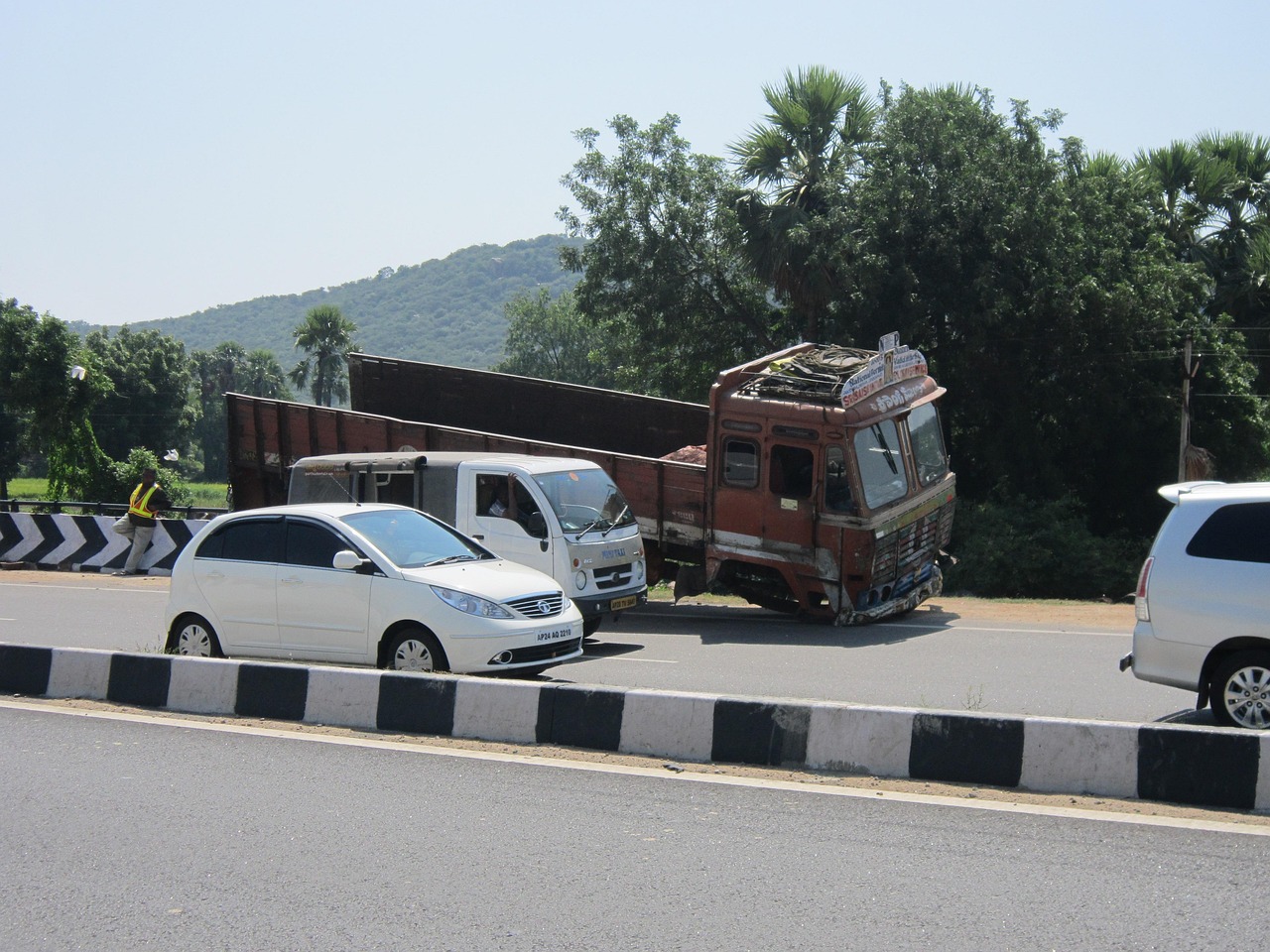
A serious truck accident can leave victims dealing with much more than immediate injuries. Medical treatment, lost income, vehicle damage, rehabilitation, and long-term changes to everyday life can create significant financial and emotional pressure. When a commercial truck causes a crash, many people naturally assume that the truck driver or trucking company is the only party that could be held responsible. In some cases, however, the circumstances may point to a defective truck, defective component, or other product-related problem.
If a defect contributed to a collision, a truck manufacturer may potentially be held legally responsible depending on the facts of the case. These claims can be considerably more complicated than a standard vehicle accident because determining responsibility may require examining the truck’s design, manufacturing history, maintenance records, component suppliers, safety warnings, recall information, and other evidence.
For an accident victim, identifying every potentially responsible party can be important. A trucking company, driver, manufacturer, parts supplier, maintenance provider, or another third party may have contributed to the crash. A qualified Truck Accident Lawyer can investigate those possibilities and help determine whether a product-liability claim should be pursued in addition to other negligence claims.
At Phoenix Injury Attorneys, truck accident cases are approached with an understanding that commercial trucking collisions can involve multiple layers of responsibility. Led by Khalil Chuck Saigh, the firm helps injured people investigate crashes, gather evidence, deal with insurance companies, and pursue compensation when another party’s negligence or wrongdoing caused their injuries.
Key Takeaways
- A truck manufacturer may potentially be liable when a defective truck or component contributes to an accident and causes injury or property damage.
- Product defects can involve a truck’s design, manufacturing process, warnings, instructions, or individual components.
- Responsibility may extend beyond the manufacturer to a parts supplier, trucking company, driver, maintenance provider, or another party.
- Evidence such as inspection records, maintenance documents, photographs, crash data, recall information, and damaged components can be important in determining what caused a crash.
- Arizona product-liability and personal-injury claims are subject to specific legal deadlines, making prompt investigation important.
- An experienced Truck Accident Attorney can investigate multiple potential causes instead of assuming that the driver was solely responsible.
- Victims may be able to pursue compensation for medical expenses, lost income, property damage, pain and suffering, and other losses when supported by the facts and applicable law.
When Can You Sue a Truck Manufacturer After an Accident?
Whether you can sue a truck manufacturer after an accident depends on what caused the crash and whether the evidence establishes a legally actionable defect or other basis for manufacturer responsibility.
Arizona law recognizes product-liability actions involving products and components. Under Arizona Revised Statutes § 12-681, a product-liability action can involve harm caused by matters including the manufacture, construction, design, installation, preparation, assembly, testing, packaging, labeling, sale, use, or failure to provide appropriate warnings or instructions. The statute also defines a manufacturer broadly to include an entity that designs, assembles, fabricates, produces, constructs, or otherwise prepares a product or component before it is sold.
That means a truck manufacturer could potentially become part of an injury claim when a defect in the truck or one of its components played a role in causing the accident.
For example, imagine that a critical steering component fails while a tractor-trailer is traveling on the highway. If the failure resulted from a manufacturing defect or another actionable product defect rather than ordinary wear, improper maintenance, or another intervening cause, the manufacturer or another responsible entity could potentially face liability.
The same principle can apply to defective braking systems, tires, suspension components, electrical systems, fuel systems, safety equipment, or other truck components. The specific facts matter because simply showing that a part failed does not automatically establish manufacturer liability.
What Types of Truck Defects Can Cause an Accident?
Truck defects generally fall into several categories, and identifying the category can help determine where responsibility may lie.
A design defect occurs when the fundamental design of a product creates an unreasonable safety problem. In a truck accident case, this could involve a component or system that was designed in a way that creates an unsafe condition even when manufactured according to specifications.
A manufacturing defect is different. In this situation, the overall design may be safe, but an individual truck or component was improperly manufactured, assembled, or otherwise produced. A single defective brake component, improperly assembled steering mechanism, or compromised structural component could potentially create a dangerous condition.
A third possibility involves inadequate warnings or instructions. Commercial vehicles and their components can require detailed instructions concerning installation, inspection, operation, limitations, or maintenance. If an appropriate warning or instruction was required but not adequately provided, that issue could become relevant to a product-liability claim.
Determining which type of defect is involved often requires more than looking at the truck after the crash. An investigation may need to compare the damaged component with manufacturing specifications, examine similar parts, review recall information, and consult qualified experts.
Can a Defective Truck Part Make the Manufacturer Responsible?
Yes, potentially. A truck manufacturer does not necessarily have to manufacture every individual component installed on a commercial vehicle for a product-related claim to arise.
Modern commercial trucks contain thousands of components, many of which may be manufactured by separate companies. A crash may therefore involve questions concerning the truck manufacturer, component manufacturer, distributor, installer, maintenance provider, or another entity.
Consider a situation where a tractor-trailer experiences a catastrophic brake failure. The investigation might need to determine whether the brake system was defectively designed, whether a particular component was manufactured incorrectly, whether the component was installed improperly, whether the truck was maintained appropriately, or whether the driver received adequate warnings and instructions.
Each possibility can lead to a different legal analysis.
This is one reason a Commercial Truck Accident Lawyer may need to investigate the entire chain of events rather than simply focusing on the driver. The party responsible for the crash may not be the person who was physically behind the wheel.
How Do You Prove a Truck Was Defective?
Proving that a defect caused or contributed to a truck accident can require substantial evidence. The condition of the truck immediately after the crash may be particularly important because damaged or altered components can become difficult to evaluate later.
Photographs and video from the accident scene can help document visible damage and the position of the vehicles. Police reports can provide information about the collision, while medical records can establish the nature and extent of injuries. However, a product-liability investigation may require additional evidence that is specific to the truck itself.
Maintenance records can help determine whether the vehicle was properly serviced before the accident. Inspection records may reveal whether a component had previously shown signs of failure. Electronic data, when available and legally obtainable, can provide additional information about vehicle operation before the crash.
Manufacturing records, technical specifications, service bulletins, recall notices, warranty information, and documentation concerning similar failures may also become relevant. In some cases, qualified experts may need to inspect the truck or failed component and determine whether the condition is consistent with a design or manufacturing defect.
Preserving the physical evidence can therefore be critical. A damaged truck or component should not simply be discarded, repaired, altered, or returned to service when litigation may be involved without considering how those actions could affect the evidence.
What If the Truck Was Recalled?
A recall can be important evidence, but the existence of a recall does not automatically prove that a manufacturer is legally responsible for a particular accident.
The National Highway Traffic Safety Administration provides recall information and allows consumers to search for recalls involving vehicles and certain vehicle equipment. NHTSA also provides information concerning safety defects and vehicle investigations.
If a truck or component involved in a crash was subject to a safety recall, an investigation can examine whether the recalled condition existed in the vehicle and whether it contributed to the collision. The timing of the recall, whether the vehicle had been repaired, and whether the particular component involved in the accident was affected can all matter.
For this reason, accident victims should not assume that a recall either proves or disproves their case. It is one piece of evidence that needs to be evaluated alongside the rest of the circumstances.
What If the Manufacturer Says the Driver Caused the Accident?
Manufacturers and their insurers may dispute responsibility for a crash. One possible argument is that the driver caused the accident through speeding, distraction, fatigue, improper operation, or another form of negligence.
That argument does not necessarily end a product-liability investigation.
A crash can have more than one contributing cause. For example, a driver may have made an error while a defective braking system simultaneously made it impossible to stop safely. Similarly, a trucking company’s failure to maintain a vehicle could exist alongside a defective component supplied by another company.
The important question is often not simply, “Who was driving?” but rather, “What caused the crash, and did the conduct or product of any other party contribute to it?”
Arizona law contains provisions addressing comparative fault and contribution in negligence and product-liability matters. The way fault is allocated in an individual case depends on the evidence and applicable law.
Can You Sue Both the Trucking Company and the Manufacturer?
Potentially, yes.
A commercial truck accident can involve several independent or overlapping causes. A trucking company could potentially be responsible for negligent hiring, training, supervision, maintenance, or other conduct, while a manufacturer or component supplier could potentially face a product-related claim.
For instance, suppose a truck’s braking system contains a defective component while the trucking company also failed to conduct required maintenance. Both issues could become relevant to the investigation. Likewise, if a truck was repaired incorrectly before the collision, the maintenance provider may need to be examined as well.
This is why an experienced Truck Accident Lawyer should look beyond the initial accident report. Determining liability can involve reconstructing the crash and identifying what happened before the truck ever reached the accident scene.

Why Truck Accident Cases Are More Complicated Than Ordinary Car Accidents
Truck accidents frequently involve more complicated evidence and multiple potentially responsible parties.
A commercial truck may be owned by one company, operated by another, maintained by a separate provider, and equipped with components manufactured by numerous suppliers. Insurance coverage may also involve commercial policies with significantly different limits and claims procedures from ordinary passenger-vehicle policies.
There may also be extensive records associated with the vehicle and its operation. Depending on the circumstances, these could include maintenance documents, inspection records, driver information, company policies, electronic vehicle data, dispatch records, communications, and other evidence.
The physical size and weight of commercial trucks can also result in severe injuries. A collision can cause traumatic brain injuries, spinal cord injuries, fractures, internal injuries, amputations, or other serious conditions requiring extensive medical care.
Because the potential damages can be substantial, insurance companies and opposing parties may have strong incentives to challenge liability or minimize the value of a claim.
A truck accident attorney can help preserve evidence, identify potentially responsible parties, communicate with insurers, and build a claim based on the available facts.
What Should You Do If You Suspect a Truck Defect Caused Your Accident?
If you believe a defective truck or component contributed to your collision, prompt action can help protect important evidence.
First, seek appropriate medical attention for your injuries. Even when injuries do not appear immediately serious, medical documentation can become important to understanding both the physical consequences of the accident and the treatment required.
Next, preserve whatever information is already available to you. Photographs of the accident scene, the truck, vehicle damage, road conditions, visible components, and injuries may become useful later. Keep medical bills, treatment records, correspondence from insurers, and other documents related to the accident.
If you have information identifying the truck, trucking company, driver, or vehicle owner, keep that information as well. The truck’s make, model, identification information, license plate, company markings, and other identifying details can assist with an investigation.
Most importantly, do not assume that the driver’s conduct is the entire explanation for the crash. If something about the truck appeared to malfunction, failed unexpectedly, or behaved differently from what you would normally expect, tell your attorney.
The sooner a potential defect is identified, the sooner steps can be taken to investigate and preserve evidence.
How a Truck Accident Lawyer Investigates a Manufacturer Liability Claim
A thorough investigation begins with understanding exactly how the collision occurred. A lawyer may review the accident report, photographs, witness statements, medical records, vehicle damage, and other available information to establish an initial timeline.
From there, the investigation can expand into the truck itself. Depending on the circumstances, this may involve obtaining inspection and maintenance records, identifying the truck’s manufacturer and component suppliers, reviewing available recall information, and determining whether similar failures have previously been documented.
The condition of the damaged vehicle or component may also need to be preserved for inspection. In complex cases, qualified accident reconstruction or engineering professionals may be needed to analyze how a component failed and whether that failure contributed to the collision.
The goal is not simply to find someone to blame. The goal is to establish, through evidence, what happened, why it happened, and which parties may legally be responsible.
Phoenix Injury Attorneys approach truck accident claims with this broader perspective. The firm states that it investigates truck accidents, gathers evidence, negotiates with insurance companies, and provides representation for people injured in truck crashes.
How Long Do You Have to Sue a Truck Manufacturer in Arizona?
Deadlines are one of the most important reasons not to delay investigating a potential truck manufacturer claim.
Arizona generally provides a two-year limitations period for actions involving injury to a person under A.R.S. § 12-542, subject to applicable exceptions. Arizona also has a specific statute addressing product-liability claims. A.R.S. § 12-551 generally provides that a product-liability action is subject to the applicable limitations period but also establishes a separate twelve-year period related to when the product was first sold for use or consumption, with statutory exceptions including certain negligence and express-warranty circumstances.
These rules can be complicated, and the correct deadline can depend on the facts of the case. A victim should not assume that there is plenty of time simply because the accident happened recently.
Preserving evidence can also become more difficult as time passes. Trucks may be repaired, sold, moved, scrapped, or returned to service. Records may become harder to obtain, and witnesses’ memories can fade.
Speaking with an attorney promptly can help determine which deadlines apply and what evidence should be preserved.
What Compensation Can You Recover After a Truck Accident?
The compensation potentially available in a truck accident claim depends on the injuries, losses, evidence, and legal theories involved.
Medical expenses can include emergency treatment, hospital care, surgery, medication, rehabilitation, physical therapy, follow-up appointments, and other reasonable accident-related treatment. When an injury requires long-term care, future medical expenses may also become relevant.
Lost income can be another significant component. A serious injury may prevent someone from returning to work temporarily or permanently. Depending on the circumstances, a claim may involve lost wages as well as reduced future earning capacity.
Property damage may also be recoverable when supported by the claim. In a major commercial truck collision, the damage to a passenger vehicle can be extensive.
Beyond financial losses, victims may experience pain, emotional distress, reduced quality of life, and other non-economic consequences. The availability and calculation of these damages depend on the circumstances and applicable Arizona law.
A truck accident attorney can review the evidence and help determine which categories of damages may apply to an individual claim.
What If You Were Partially at Fault?
Being accused of contributing to a truck accident does not necessarily mean you have no claim.
Arizona’s comparative-fault framework can affect how responsibility and damages are handled when multiple parties contributed to an injury. The precise effect of alleged fault depends on the facts and applicable law.
For example, an insurance company might argue that an injured driver was following too closely. An investigation could reveal that the truck’s braking system failed unexpectedly, making the circumstances substantially different from the insurer’s initial characterization.
This is another reason it is important to investigate the physical and mechanical evidence instead of accepting an insurance company’s explanation without scrutiny.
Why Preserving the Truck Can Matter
The truck itself may be one of the most important pieces of evidence in a manufacturer-liability claim.
Once a truck is repaired or its components are replaced, proving what condition the vehicle was in at the time of the collision can become more difficult. In some circumstances, a component suspected of causing the accident may be discarded or altered before an independent inspection takes place.
An attorney can evaluate what preservation steps may be appropriate under the circumstances. This can be particularly important when the suspected defect involves a specific mechanical or electronic component that may no longer be available later.
Preserving evidence does not mean that every truck must remain untouched indefinitely. Rather, it means recognizing early that physical evidence may be important to determining liability and taking appropriate legal steps to protect it.
How Phoenix Injury Attorneys Can Help With a Truck Accident Claim
Truck accident cases require careful attention to both the injuries suffered and the circumstances that caused the collision.
Phoenix Injury Attorneys is based in Arizona and represents people injured in vehicle and truck accidents. The firm describes its approach as involving investigation of the accident, collection of evidence, and negotiations with insurance companies. It also offers free case evaluations and states that it handles qualifying personal injury cases on a contingency-fee basis, meaning clients do not pay legal fees unless compensation is recovered.
Led by Khalil Chuck Saigh, the firm can help investigate whether the driver, trucking company, manufacturer, component supplier, maintenance provider, or another party may have contributed to the accident.
The objective is to build a claim based on evidence rather than assumptions. That can include examining how the collision occurred, what condition the truck was in, whether a component failed, whether the vehicle had a relevant recall, and what damages the injured person has experienced.
Frequently Asked Questions About Truck Manufacturer Liability
1. Can I sue a truck manufacturer if a defective part caused my accident?
Potentially. If a defective truck component contributed to an accident and caused injury or property damage, a product-liability claim may be possible depending on the evidence and applicable law. An investigation should determine whether the problem involved design, manufacturing, warnings, maintenance, installation, or another cause.
2. Do I need a Truck Accident Lawyer for a manufacturer claim?
A manufacturer claim can be considerably more complicated than an ordinary vehicle accident claim. Multiple companies may be involved, and technical evidence may be required to determine why a component failed. An attorney can help investigate those issues and identify potentially responsible parties.
3. What if the truck manufacturer says the trucking company was responsible?
The manufacturer may dispute responsibility, but that does not automatically establish that the trucking company was solely responsible. A collision can involve multiple contributing causes. The evidence should be examined to determine whether a defect, negligent maintenance, driver conduct, or another factor contributed to the crash.
4. Can I sue the trucking company and the manufacturer at the same time?
Potentially. If the evidence supports separate legal claims against different parties, more than one defendant may be involved. The appropriate parties depend on the facts surrounding the accident.
5. What evidence can prove a defective truck caused my accident?
Evidence can include the damaged truck or component, maintenance and inspection records, photographs, accident-scene evidence, vehicle data, recall information, technical documentation, witness accounts, and expert analysis. The evidence required will depend on the suspected defect and circumstances of the crash.
6. Does a truck recall prove the manufacturer is liable?
Not automatically. A recall can be relevant evidence, but the investigation must determine whether the recalled defect affected the particular vehicle or component involved and whether it contributed to the accident.
7. What if the defective truck part was made by another company?
The company that manufactured the specific component may potentially be relevant to the claim. Depending on the circumstances, other entities involved in designing, manufacturing, distributing, installing, or maintaining the component may also need to be investigated.
8. How long do I have to file a truck accident lawsuit in Arizona?
Arizona generally has a two-year limitations period for many personal-injury claims, while product-liability claims can involve additional statutory rules and exceptions. Because deadlines vary based on the facts, it is important to have a potential claim evaluated as soon as possible.
9. Can I recover compensation if I was partly responsible for the accident?
Possibly. Arizona law addresses comparative fault in negligence and product-liability matters. Whether and how alleged fault affects a particular claim depends on the evidence and applicable law.
10. How can a Truck Accident Attorney help me?
A truck accident attorney can investigate the collision, identify potentially responsible parties, preserve important evidence, communicate with insurers, evaluate damages, and pursue a claim when the evidence supports one. In a manufacturer-related case, legal and technical investigation may be especially important.
Injured in a Truck Accident? Get a Lawyer Ready to Fight Back
A collision with a commercial truck can change your life in an instant. Because of their size and weight, semi-trucks, tractor-trailers, delivery trucks, and other commercial vehicles can cause catastrophic injuries, extensive property damage, and overwhelming medical expenses. If someone else’s negligence caused the crash, you may have the right to pursue compensation for what you’ve lost.
At Phoenix Injury Attorneys, we help truck accident victims take on trucking companies, drivers, insurers, and other responsible parties. Led by Khalil Chuck Saigh, our Arizona-based firm investigates the crash, gathers critical evidence, reviews driver and trucking company records, identifies every potentially liable party, and builds a strong claim focused on maximizing your recovery.
Truck accident cases can be far more complicated than ordinary car accident claims. Insurance companies may move quickly to protect themselves, dispute liability, minimize your injuries, or pressure you into accepting less than your case is worth. Phoenix Injury Attorneys are ready to protect your interests from the start.
If you or someone you love was hurt in a commercial truck crash, contact Phoenix Injury Attorneys today for a free and confidential case review. We’ll explain your legal options and fight for compensation for medical bills, lost income, pain and suffering, property damage, and other losses caused by the accident.
Disclaimer:
The information provided in this article is for educational and informational purposes only and is not intended as medical, legal, or professional advice. Always consult a qualified healthcare provider, toxicologist, or legal professional regarding any health concerns, chemical exposures, or potential claims. The author and publisher are not responsible for any actions taken based on the information in this article. Use and handle all household chemicals according to product instructions and safety guidelines.