


Key Takeaways
- As complex injury cases frequently include more than one party, it is critical to determine all possible parties liable for fair restitution.
- Though disputed fault is common and can significantly affect claim results, thoroughly collecting evidence and knowing comparative fault guidelines are key.
- Serious injuries from complicated accidents have a lasting impact on victims, financially and emotionally. This is why precise damage estimates and comprehensive medical records are so crucial.
- Government entities and uninsured drivers can be factors in these cases, which require expertise in unique legal processes and extra coverage options to safeguard victims’ rights.
- Utilizing expert witnesses and accident reconstruction can illuminate liability questions and bolster your claims, particularly when confronted with technical or medical complexities.
- Being aggressive in negotiating with insurance companies and willing to go to court when necessary helps get you the most compensation and combat the strategies insurers use to lowball settlements.
Arizona complex injury cases are claims that have numerous extenuating circumstances, such as multiple defendants, complicated medical history, or ambiguous liability. Such cases frequently require profound legal and medical expertise, as the state employs comparative fault rules. Many claims arise from auto accidents, workplace injuries, or medical malpractice. To construct a winning case, attorneys frequently gather voluminous medical records, consult numerous experts, and wade through piles of data on causation and damages. Arizona courts can consider both short- and long-term impacts on someone’s life as well as actual care expenses. For individuals or families, this experience can seem difficult and lengthy. The following sections describe each step, along with what to anticipate specifically.

How Liability Is Determined in Complex Injury Cases
Complex injury cases in Arizona arise when there are multiple parties and serious injuries involved, which makes liability difficult to determine. Determining fault requires a systematic process that involves evidence gathering, causation analysis, and legal context for these cases. Physical evidence like photos and eyewitness testimony is crucial, but managing a transparent chain of custody is vital to preserve its worth in court. Arizona acknowledges both actual and proximate causation, contributing an additional dimension of complexity when attempting to link a party’s conduct with the injury.
1. Multiple Parties
When an accident is a multiple-party situation, each party’s involvement must be investigated. Here, the claims tend to fragment into cross-claims and counterclaims and even third-party actions among the defendants, weaving a web of legal liability. Take a multi-vehicle crash. One driver is partially to blame for speeding, another for not yielding, and a third has a defective vehicle. Joint and several liability in Arizona allows a court to allocate damages among all parties at fault, decreasing the damages awarded to each according to their portion of blame. This breakup complicates injury liability as well, making it more difficult for any single individual to get paid the full amount of their claim, with the result frequently dependent on how well each party’s role is documented.
2. Disputed Fault
Disputes regarding the facts can bog down the process. Conflicting narratives by parties or witnesses make it difficult to determine who is responsible for the injury. As much evidence as you can assemble, such as photos, medical records, and experts, will help. Arizona has a comparative negligence rule, so even if you are partly responsible, you might still receive some compensation. Insurance companies will attempt to deflect blame and reduce their payout, so anticipate resistance.
3. Severe Injuries
Serious injuries such as brain damage, spinal cord damage, or amputation need more than just rudimentary care. They can result in long-term needs and big bills, altering an individual’s life and labor. Courts consider all future responsibilities, such as lost wages and care. Families can experience financial stress and heartbreak, both of which go into the equation of total damages.
4. Government Entities
Occasionally, a city bus or public worker might get swept in. Arizona has special laws like notice requirements and shorter deadlines that make claims against the government much stricter. The filing period is brief, typically 180 days. Establishing government negligence is challenging because of legal immunities and complicated regulations. This often entails additional processes for victims.
5. Uninsured Drivers
If the at-fault driver’s not insured, you may have to dip into your own uninsured motorist coverage. This catch covers losses, but might not be sufficient for catastrophic injuries. The legal mechanisms to go after the uninsured driver or some other comparative negligent party exist. Yet, getting full compensation is frequently challenging in these cases.
Identifying All Responsible Parties
Pinpointing all of the possible responsible parties in a complicated injury case is crucial to equitable compensation. When one party is overlooked, indemnity can lag, and victims can be left holding expenses that should be distributed among the collective at-fault. In Arizona, injured individuals are permitted to seek damages from any responsible party whose action or inaction caused damage, even when liability is shared. Since Arizona is a comparative negligence state, injured parties can still recover damages even if they were partially at fault, but the amount is reduced according to their level of responsibility. Timely, careful identification of responsible parties is vital, as the two-year statute of limitations limits how long victims have to act.
Beyond Drivers
It’s not just the people who are involved in accidents who have liability. It can affect third parties. For instance, employers can be liable if a workman causes an accident on the job under the theory of vicarious liability. Car makers could be at fault, for example, if some sort of auto defect helped cause the accident.
For example, a delivery driver crashed on the job. The investigation revealed the employer neglected to maintain the vehicle, so both the driver and the employer were responsible. In another instance, just one badly repaired truck caused a multi-car pileup. Here, the maintenance contractor was liable for shoddy work. Vicarious liability applies when someone works on a task, so their boss can get sued as well.
Thorough examination of work histories, service records, and incident reports aids in revealing these links. If you miss one party, you limit the injured person’s opportunity to recover damages.
Product Defects
Product flaws have the ability to escalate an accident from minor to major. For liability, the law examines if the product was defectively manufactured or designed, or if there were inadequate warnings. Plaintiffs must prove the defect caused the injury and that the product was being used as intended.
Defect Type | Example | Resulting Injury |
Design Defect | Faulty airbag system | Chest injuries |
Manufacturing Error | Contaminated medicine | Allergic reaction |
Inadequate Warning | No caution for hot surfaces | Burns |
Part of filing a claim in Arizona involves collecting evidence, coordinating with specialists, and operating before the 2-year statute of limitations. Legal assistance is frequently required to comply with these stringent requirements.
Injuries Caused by Dangerous Property Conditions
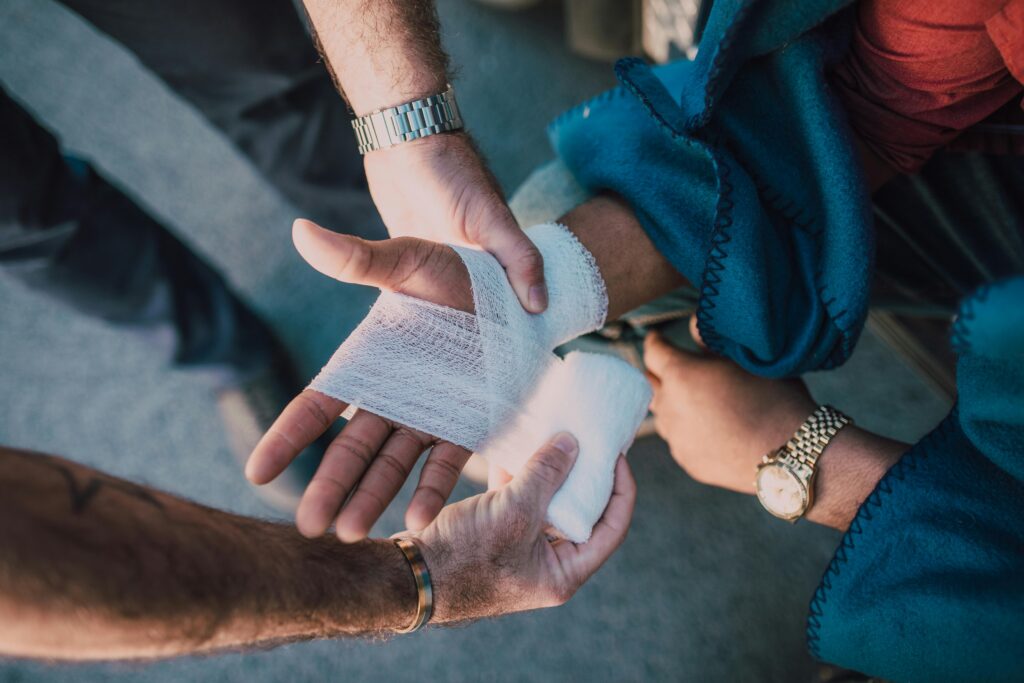
If injuries occur on someone else’s property, the owner may be liable if they neglected to maintain it. Contractors or hired staff may also be responsible. Typical injuries on unsafe property include fractures, sprains, concussions, and lacerations.
There are legal obligations on owners to rectify known dangers or warn visitors. To recover, you have to demonstrate that the owner or other responsible party had a duty, breached that duty, and their breach caused your injury and actual damage.
- Seek medical help right away and keep records.
- Photograph the scene and get the names of witnesses.
- Report the incident to the property owner or manager.
- Save any physical evidence, like clothing or broken items.
- Talk to a lawyer to discuss potential responsible parties and filing deadlines.
Arizona’s Comparative Fault Rule
Arizona follows a pure comparative negligence system under Arizona Revised Statutes § 12-2505, which means injured individuals can still recover damages even if they were largely responsible for the accident. Unlike some states that prevent recovery if a claimant is more than 50% at fault, Arizona allows compensation regardless of the percentage of fault. For example, if a person is found to be 99% responsible for an accident, they may still recover 1% of their total damages from other at-fault parties. This approach ensures that compensation reflects each party’s level of responsibility rather than completely barring recovery.
How damages are calculated under Arizona’s comparative fault rule:
- Step 1: Determine total damages. The court or jury calculates the full value of the claim, including medical bills, lost income, pain and suffering, and other related losses.
- Step 2: Assign fault percentages. Each party involved in the accident receives a percentage of responsibility based on evidence such as witness testimony, expert analysis, and physical or video evidence.
- Step 3: Adjust the final award. The total damages are reduced according to the injured person’s share of fault. For instance, if damages equal $100,000 and the injured party is 20% at fault, they would recover $80,000.
Determining fault percentages can be complex because even small changes can significantly affect the final payout. A shift from 20% fault to 30% fault on a $100,000 claim reduces recovery by an additional $10,000. Courts carefully evaluate evidence—including accident reports, expert testimony, and sometimes video footage—to reach these percentages. This process ensures that compensation more accurately reflects real-world responsibility.
Many people mistakenly believe that being partially at fault means they cannot recover anything. Under Arizona’s comparative fault rule, that is not the case. For example, if a cyclist runs a red light but is struck by a speeding car, both parties may share responsibility. If the cyclist is found 60% at fault and the driver 40% at fault, the cyclist can still recover 40% of their damages. This system gives injury victims a fair opportunity to receive compensation even when mistakes contributed to the accident.
Case Scenario | Plaintiff Fault % | Total Damages (USD) | Recovery (USD) |
Pedestrian jaywalks, hit by a car | 40% | 50,000 | 30,000 |
Bicyclist ignores the sign, car speeds | 60% | 20,000 | 8,000 |
The driver texts, rear-ended by a tailgater | 25% | 100,000 | 75,000 |
Plaintiff fails to signal, sideswiped | 80% | 10,000 | 2,000 |
How Evidence Strengthens Complex Injury Claims
Evidence defines complicated injury claims in Arizona. There needs to be hard evidence to support injury claims, particularly as claims are audited by insurance companies. Nothing is too small, from what occurred at the scene to the enduring impact on your day-to-day living. Without evidence, such claims run the risk of being dismissed or underestimated. Arizona has much more rigorous regulations about what records or testimony can be used in court, making it all the more imperative to gather the proper paperwork and witness statements.
Expert Witnesses
Expert witnesses interpret the technical or medical details in court. They assist judges and juries in comprehending sophisticated matters, such as the biomechanics of an injury or the physics of its occurrence. In Arizona, only qualified professionals with the appropriate expertise and background are permitted to provide expert testimony, such as physicians, engineers, or accident reconstruction experts. Their testimony can be the linchpin in demonstrating both how and why an injury happened. Selecting the appropriate expert requires care; attorneys seek ones with strong communication ability and demonstrated expertise. Being an expert witness requires preparation, and experts have to review all records and evidence. They can give an unbiased view that stands up in court.
Accident Reconstruction
Accident reconstruction applies science and engineering to describe what occurred. When blame is contested, these specialists reconstruct the event, leveraging forensic evidence, imagery, and testimony. They can utilize computer modeling or physical measurements to demonstrate velocity, force, and impact locations. This examination can dispel skepticism and reinforce an argument, particularly when accounts conflict. Courts rely on these conclusions to determine liability. For example, accident reconstruction has altered verdicts by providing context that written reports or photos could not.

Medical Documentation
Medical records lie at the core of injury claims. They prove the injury, tie it to the crash, and describe the damage. Here in Arizona, these records don’t just demonstrate that a person was injured; they are used to demonstrate what caused the injury and the extent of it. Maintaining daily notes of symptoms and treatment provides a window into how life changed post-accident. Regular care records, such as follow-ups and continuing pain or stiffness, can impact verdicts and final damage awards.
Essential Documents and Records to Collect:
- Police or accident reports
- Medical records and treatment plans
- Statements from witnesses
- Photos of injuries and the accident scene
- Receipts for related expenses
- Notes on daily symptoms and changes
Dealing with Tricks from Insurance Companies

Hard-to-handle injury cases in Arizona often turn into long and exhausting battles, especially when insurance companies use strategic tactics to minimize payouts. These companies rely on experienced attorneys and claims professionals whose main goal is protecting their bottom line. One common tactic is shifting blame to the injured person by using Arizona’s comparative fault rule. Under this rule, if you are found partially responsible for the accident, your compensation is reduced by your percentage of fault. Insurers may question your actions after the accident or twist your statements to assign more blame to you, which is why it’s important to avoid admitting fault at the scene and stick to factual statements rather than opinions.
When communicating with insurance adjusters, it’s best to remain cautious and limit what you disclose. Adjusters may request recorded statements or ask detailed questions about your injuries before you fully understand their extent. Providing this information without legal guidance can weaken your claim. Insurance companies also use internal formulas to calculate settlement offers, often multiplying your direct financial losses by a factor between 1.5 and 5. These calculations frequently result in low initial offers designed to encourage quick settlements. Accepting these early offers may leave you with far less compensation than you truly need, particularly if ongoing medical care or lost income becomes a factor.
Having legal representation can make a significant difference when dealing with insurance companies. An experienced attorney understands how insurers operate, can identify lowball offers, and negotiate for fair compensation. Lawyers also help prevent costly mistakes, such as signing documents you don’t fully understand or missing critical legal deadlines. In Arizona, failing to file within the required timeframe can eliminate your right to recover damages altogether. Legal guidance ensures that every step of the process is handled correctly and that your rights remain protected.
Key points to remember when dealing with insurance companies include:
- Insurance companies often attempt to shift blame using Arizona’s comparative fault rule.
- Avoid admitting fault at the accident scene and stick strictly to factual statements.
- Be cautious when speaking with insurance adjusters or providing recorded statements.
- Early settlement offers are often intentionally low and may not cover long-term costs.
- Attorneys can identify unfair tactics and negotiate for appropriate compensation.
- Missing legal deadlines in Arizona can result in losing your right to pursue damages.
- Signing agreements too early can prevent you from seeking additional compensation later.
Settling for less than you deserve can have lasting financial consequences, including unpaid medical bills and uncovered future expenses. Once a settlement agreement is signed, it is usually final. For this reason, it’s wise to avoid signing documents or giving detailed statements without legal counsel. Taking these precautions helps ensure you remain in control of your claim and protects your rights throughout a process that often favors insurance companies.
Why Legal Action Becomes Necessary
In complex injury cases, taking legal action is very important, especially in Arizona, where laws and insurance can be confusing. Many people find that filing a lawsuit is the best way to get fair compensation when insurance companies try to offer less money. For example, if you have ongoing medical needs after a car accident, insurance might not cover all your future costs. By pursuing a legal case, you can make sure you have enough funds for long-term care.
Fights about who caused the injury can lead people toward litigation. These issues tend to end up in court when both sides cannot reconcile whether it was the other guy’s fault or how severe the injury is. Arizona is a pure comparative negligence state, so if more than one party is liable, the court apportions responsibility and adjusts damages. If you’re found partially at fault, your payout is reduced by your degree of fault, which makes it essential to offer up evidence and make your case.
Taking legal action instead of settling with insurance gives more control over the process. Often, insurance companies desire a fast, inexpensive settlement. When you sue, you can present evidence, medical records, and expert testimony to support your case. You must prove four things to win a negligence case: duty of care, breach of duty, causation, and damages. All of these require diligent effort, like gathering medical records, identifying witnesses, and demonstrating the real-world effect of the injury.
Complex injury cases involving litigation can be resolved in several ways, ranging from out-of-court settlements to court judgments. Sometimes legal action translates into more money, and sometimes into appeals or additional legal actions. It’s not just the emotional toll of going to court, and I’m not minimizing that struggle, but the financial strain. Legal fees, delays, and stress are tough, but sometimes necessary if the other side will not negotiate in good faith. There’s the statute of limitations, too; if you dally too long in filing, you could forfeit your opportunity at recovery.
Conclusion
Complex injury cases, arizona Who did what to whom? Follow each of them and track the facts. Arizona’s fault rules where everyone’s role in the injury determines how much they contribute to paying. Proof makes a good case. Insurance groups have a lot of tricks, so be on the lookout. When it does, the smartest move is contacting experienced lawyers early. Real lives are transformed after injury, and real answers are what truly count. Get the facts, pound the table, and keep your eye on just results. If you have a hard case, consider consulting a lawyer who understands this turf.
Frequently Asked Questions
What makes an injury case complex in Arizona?
Your case is complicated when it involves multiple liable parties, unclear fault, or catastrophic injuries. Such cases tend to need professional insight and comprehensive proof.
How is liability determined in complex injury cases?
Depending on the facts of the case, evidence gathered, and Arizona’s comparative fault rules, liability is assigned. Everyone’s acts are examined to determine liability.
What is Arizona’s comparative fault rule?
Arizona is a pure comparative fault state. This means that each party is liable for their percentage of fault, and damages are reduced accordingly.
Why is evidence so important in complex cases?
Hard-hitting evidence, like medical records and witness testimony, assists in establishing the facts and liability. It strengthens your case for just compensation.
How do insurance companies handle complex injury claims?
Insurance companies can attempt to lowball or fight liability. They love nothing more than to stall or minimize your recovery. Aggressive legal representation can make a difference.
When does legal action become necessary in Arizona injury cases?
Lawsuits become necessary when the parties cannot agree on liability or damages. A lawsuit could guarantee your rights and fair damages.
Who can be held responsible in a complex injury case?
Anyone whose behavior helped cause the injury can be liable. This can include drivers, employers, or manufacturers.