


A truck accident can be one of the most complicated types of personal injury cases. Commercial trucks are significantly larger and heavier than passenger vehicles, and crashes involving tractor-trailers, semi-trucks, delivery trucks, tankers, and other commercial vehicles can result in severe injuries, extensive property damage, and substantial financial losses.
After a serious collision, you may know that you need legal help, but you may not know what type of attorney is right for your situation. You might consider hiring a general attorney who handles a variety of legal matters, or you may wonder whether working with a truck accident lawyer is worth it.
The distinction can matter. Truck accident claims often involve more than determining which driver caused a collision. A case may require an investigation into the truck driver’s conduct, the trucking company’s safety practices, vehicle maintenance, cargo loading, hours-of-service compliance, training, hiring decisions, insurance coverage, and potentially the actions of other companies or individuals.
Federal regulations also apply to many commercial motor carriers and drivers, creating another layer of rules that may be relevant to a claim. When a crash involves hazardous materials, oversized loads, defective equipment, or multiple commercial vehicles, the investigation can become even more complicated.
For these reasons, someone injured in a commercial truck crash may benefit from choosing an attorney who understands the unique issues that can arise in trucking cases.
Key Takeaways
- Truck accident claims can involve multiple potentially responsible parties, including drivers, trucking companies, cargo handlers, maintenance providers, manufacturers, and other third parties.
- Commercial trucking cases may involve federal and state safety regulations that do not apply in the same way to ordinary passenger-vehicle accidents.
- Important evidence can include driver records, vehicle inspection and maintenance records, electronic data, photographs, video footage, cargo information, and company records.
- A general attorney may handle personal injury matters, but a lawyer experienced in truck accident cases may be better prepared to investigate the trucking-specific issues involved.
- The value of a claim depends on the facts, the injuries involved, the available evidence, liability, insurance coverage, and applicable law.
- Arizona has deadlines for filing personal injury claims, making it important to address a potential case promptly. Arizona generally provides two years for many personal injury actions, subject to exceptions.
What Makes Truck Accident Cases Different From Car Accident Cases?
A typical car accident may involve two drivers, their insurance companies, police reports, photographs, witness statements, and medical records. While these cases can still become complicated, commercial truck crashes frequently involve a much broader investigation.
A truck may be owned by one company, operated by another company, driven by an employee or independent contractor, loaded by a separate business, maintained by another provider, and insured through one or more commercial policies. Depending on the circumstances, several parties may have information that could help determine how the accident happened.
The truck itself may also contain important evidence. Modern commercial vehicles can have electronic systems that record information about vehicle operation. Investigators may also need to examine inspection records, maintenance documentation, driver qualification materials, dispatch information, and other records.
If cargo contributed to the collision, the investigation may also need to address how the load was selected, packaged, secured, and transported.
This is one reason a commercial truck accident lawyer can be particularly valuable. The attorney needs to look beyond the immediate collision and determine what factors contributed to the crash.
Why Trucking Regulations Can Matter in an Accident Claim
Commercial trucking is subject to extensive safety requirements. The Federal Motor Carrier Safety Administration, or FMCSA, oversees regulations involving commercial motor carriers and various aspects of motor carrier safety.
When hazardous materials are transported, additional requirements may apply. FMCSA explains that federal hazardous-material regulations address areas such as shipper and carrier responsibilities, communications, training, emergency response, packaging, and cargo compatibility.
These regulations can become relevant when investigating whether a trucking company or another party complied with applicable safety requirements.
For example, depending on the circumstances, an investigation may examine whether the driver was properly qualified and trained, whether required inspections were performed, whether cargo was properly secured, whether required documentation was maintained, or whether a vehicle was operated in compliance with applicable rules.
A truck accident attorney who regularly handles these cases can identify the types of records and regulatory issues that may deserve closer attention.
A Truck Accident Lawyer Can Investigate More Than the Police Report
A police report can be an important piece of evidence, but it is not necessarily the complete story.
Police officers responding to a crash may document the scene, speak with drivers and witnesses, identify apparent violations, and record information about the vehicles involved. However, a serious trucking accident may require a much more extensive investigation.
An attorney may examine available evidence such as photographs, surveillance footage, dashcam footage, witness statements, vehicle data, medical records, inspection records, maintenance documents, driver records, employment information, and trucking company policies.
The attorney may also look at what happened before the crash.
For example, if a truck driver lost control after becoming fatigued, the investigation may need to examine whether the driver was operating within applicable hours-of-service requirements. If a mechanical failure contributed to the crash, maintenance and inspection records may become important. If cargo shifted and caused the truck to overturn, investigators may need to determine who loaded and secured the cargo.
The goal is to develop a complete understanding of the accident rather than relying solely on the first explanation offered after the collision.
Identifying Every Potentially Responsible Party
One of the biggest differences between truck accidents and ordinary vehicle crashes is the number of parties that may potentially be involved.
The truck driver may be responsible if negligent driving contributed to the collision. However, the driver may not be the only party whose conduct matters.
A trucking company could potentially face liability depending on its relationship with the driver and the facts of the accident. Issues involving hiring, training, supervision, scheduling, vehicle maintenance, or company policies may need to be investigated.
A cargo-loading company could potentially be relevant if improperly secured or distributed cargo contributed to the crash. A maintenance provider could become important if negligent repairs or inspections played a role. In some situations, a manufacturer may become relevant if a defective component contributed to the accident.
This does not mean every person or company connected to a truck is automatically legally responsible. Liability depends on the evidence and applicable law.
A truck accident lawyer can help determine which parties should be investigated and whether there is a legal basis for pursuing a claim against them.
Trucking Company Records Can Be Critical Evidence
Commercial trucking companies maintain records that may not exist in a typical passenger-vehicle accident.
Depending on the case, relevant records may include driver qualification files, training documentation, inspection reports, maintenance records, dispatch records, electronic logging information, employment records, cargo documentation, and communications relating to the trip.
These records can help establish what happened before the crash.
For example, if a truck driver was allegedly fatigued, records concerning the driver’s schedule and driving activity may become important. If the truck experienced a mechanical problem, maintenance and inspection documentation may help establish whether the vehicle was properly maintained.
If a company claims that a driver was acting independently, the relationship between the driver and the company may also need to be examined.
A truck accident lawyer can identify which records may be relevant and take appropriate legal steps to seek evidence when necessary.
Evidence Can Disappear After a Truck Accident
Time can be particularly important in a commercial trucking case.
Evidence may be lost, overwritten, discarded, or become more difficult to obtain as time passes. Surveillance systems may automatically overwrite recordings. Vehicles may be repaired or moved. Physical evidence at the crash scene can change. Electronic records may have retention periods.
This does not mean that every trucking case requires immediate litigation, but it does mean that an early investigation can be valuable.
An attorney may take steps to identify important evidence and communicate with relevant parties about preserving records. Depending on the circumstances, formal legal procedures may also be necessary to obtain evidence.
For an injured person, this is difficult to manage alone while recovering from serious injuries, attending medical appointments, dealing with lost income, and handling insurance communications.
Truck Accident Cases May Involve Large Commercial Insurance Policies
Commercial trucks generally operate under insurance arrangements that can differ substantially from ordinary passenger vehicles.
A trucking company may have commercial liability coverage, and additional policies or layers of coverage may exist depending on the business and the nature of the transportation operation.
This can make the insurance process more complicated.
After a serious crash, an insurance company may begin investigating quickly. An insurer may ask questions about the accident, request statements, seek medical records, or make an early settlement offer.
It is important to remember that an insurance company’s interests are not necessarily the same as yours.
The insurer may focus on limiting its financial exposure, while an injured person needs to understand the full impact of the accident before deciding whether to accept a settlement.
A truck accident attorney can communicate with insurers, review the circumstances of the claim, and help determine whether a proposed settlement adequately addresses the losses supported by the evidence.
What If the Truck Was Carrying Hazardous Materials?
Some trucking accidents involve hazardous cargo, which can introduce additional safety and liability issues.
Hazardous materials can include substances that create risks such as fire, explosion, chemical exposure, or other dangers when released during a collision. Federal rules establish requirements concerning hazardous-material transportation, including shipping papers and emergency-response information.
FMCSA explains that hazardous-material shipping papers generally communicate information such as the proper shipping name, hazard class, identification number, and packaging group. Emergency-response information and an emergency telephone number may also be required.
If a hazardous-material truck crashes and cargo spills, burns, leaks, or otherwise creates a dangerous condition, the investigation may need to determine whether the material was properly packaged, documented, transported, and secured.
Injured individuals may also suffer harm without being directly struck by the truck. Exposure to chemicals, smoke, fire, or contaminated materials may create additional injuries and damages.
These cases demonstrate why trucking litigation can require knowledge of both personal injury law and the regulatory environment surrounding commercial transportation.
What Types of Injuries Can Result From Truck Accidents?
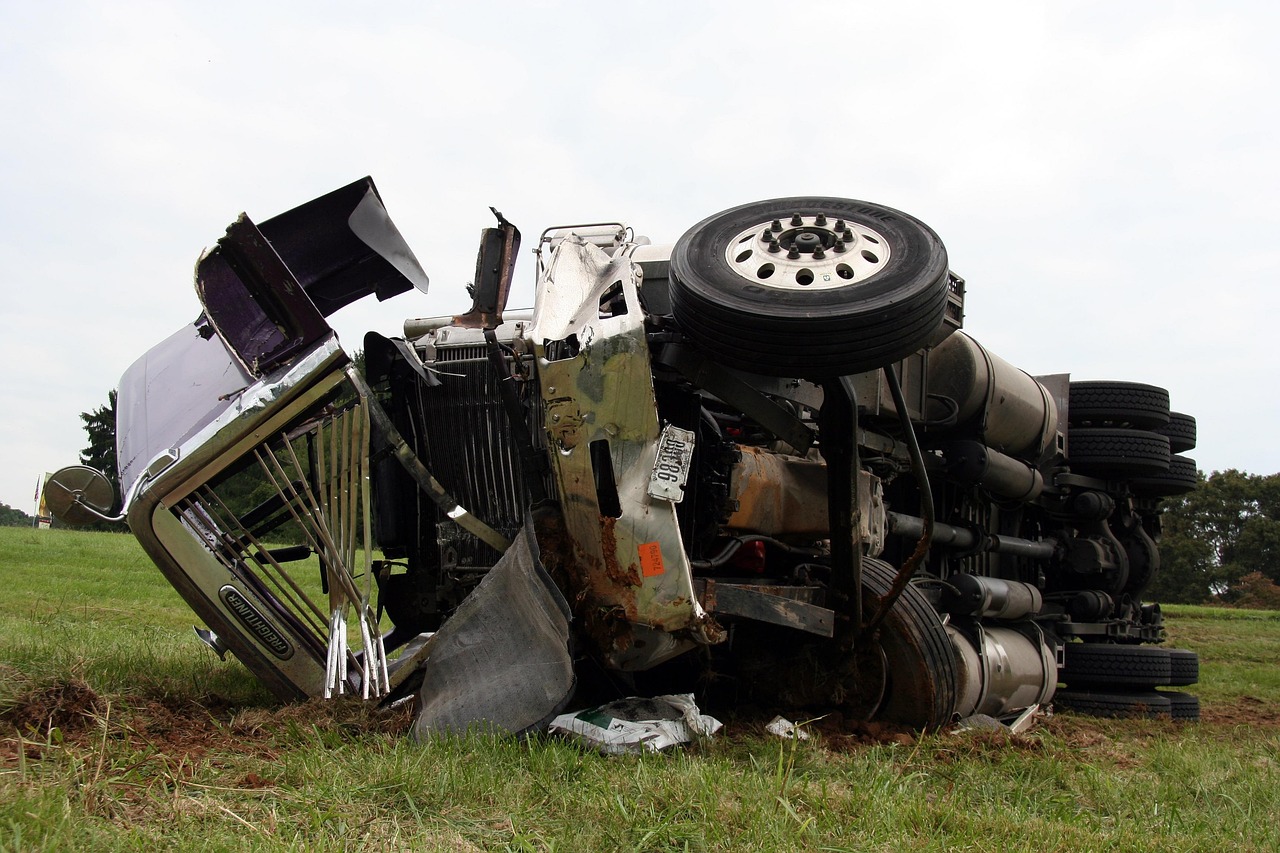
Because of the size and weight of commercial trucks, collisions can produce serious injuries.
Potential injuries include traumatic brain injuries, spinal cord injuries, fractures, internal injuries, burns, amputations, severe soft-tissue injuries, and other forms of physical trauma.
Some injuries may require emergency treatment, surgery, hospitalization, rehabilitation, or long-term medical care. In particularly serious cases, an injury can affect a person’s ability to work, care for family members, participate in daily activities, or maintain the quality of life they had before the crash.
The full impact may not always be obvious immediately.
Some injuries can develop or become more apparent after the initial accident. This is one reason medical evaluation and appropriate follow-up care are important after a serious collision.
Medical documentation can also become important evidence in a personal injury claim. It can help establish the nature of the injuries, treatment received, prognosis, and relationship between the accident and the claimed losses.
What Compensation May Be Available After a Truck Accident?
The compensation potentially available in a truck accident case depends on the circumstances and applicable law.
Depending on the facts, a claim may seek compensation for losses such as medical expenses, future medical needs, lost income, reduced earning capacity, property damage, pain and suffering, and other legally recoverable damages.
The seriousness of the injuries is only one factor.
The cause of the accident, evidence of negligence, the parties involved, available insurance coverage, the extent of financial losses, and other legal considerations can all affect a claim.
A lawyer can review the available information and explain what categories of damages may potentially apply.
Importantly, no attorney can guarantee a particular outcome or settlement amount. The value of a claim must be evaluated based on the specific facts and evidence.
When Should You Contact a Truck Accident Lawyer?
If you suffered significant injuries in a commercial truck accident, it is generally wise to seek legal advice as soon as reasonably possible.
Early legal guidance can help you understand your options before making important decisions with an insurance company or another party involved in the accident.
It can also provide an opportunity to identify evidence that may be important to the case.
Arizona law generally provides a two-year limitations period for many personal injury actions under A.R.S. § 12-542, although exceptions and other rules can apply.
Because deadlines can depend on the circumstances, an injured person should not assume that waiting will have no consequences.
A prompt consultation with a qualified truck accident lawyer can help you understand what deadlines and legal issues may apply to your situation.
What Should You Do After a Serious Truck Accident?
If you are physically able to do so, there are several practical steps that may help protect your health and potential claim.
First, seek medical attention for your injuries. Follow your healthcare provider’s instructions and attend recommended follow-up appointments.
Second, report the accident to the appropriate authorities. A police report can provide useful documentation of the collision.
Third, preserve photographs, videos, medical records, bills, repair estimates, and other documents related to the accident.
If you have information about the truck, trucking company, driver, cargo, or witnesses, preserve that information as well.
You should also be cautious about giving recorded statements or signing documents for an insurance company before you understand what you are agreeing to.
Most importantly, focus on your health and obtain legal guidance when appropriate. Serious truck accidents can involve complicated investigations that are difficult for an injured person to handle alone.
How Phoenix Injury Attorneys Can Help With a Truck Accident Claim
Phoenix Injury Attorneys represents clients in personal injury matters, including vehicle accident cases. The firm’s team includes attorney Khalil Chuck Saigh, who has practiced personal injury law for more than 20 years according to the firm’s attorney profile.
The firm states that it offers free case evaluations and handles truck accident matters involving investigation, insurance negotiations, and legal representation.
For someone injured in a truck accident, the legal process can feel overwhelming. Medical treatment, lost income, vehicle damage, insurance communications, and uncertainty about the future can all create additional stress.
Having an attorney review the circumstances can help an injured person understand whether a legal claim may exist, what evidence may be important, and what options may be available.
Frequently Asked Questions About Hiring a Truck Accident Lawyer
1. Do I really need a truck accident lawyer after a commercial truck crash?
Not every accident requires an attorney, but serious commercial truck crashes can involve complicated liability, insurance, regulatory, and evidence issues. If you suffered significant injuries or the trucking company or insurer is disputing responsibility, consulting a truck accident lawyer may help you understand your legal options.
2. What is the difference between a truck accident lawyer and a general attorney?
A general attorney may handle many different types of legal matters. A truck accident lawyer focuses on the issues that commonly arise in commercial trucking cases, including trucking regulations, driver records, vehicle maintenance, cargo loading, commercial insurance, and multiple-party liability.
3. Can I sue the trucking company if the truck driver caused the accident?
Potentially, depending on the driver’s relationship with the company and the facts surrounding the collision. A trucking company may have legal responsibility in certain circumstances, but liability must be established based on applicable law and evidence.
4. What if the truck driver was not the owner of the truck?
The ownership of the vehicle is only one part of the investigation. A truck may be owned, leased, operated, maintained, or dispatched by different parties. An attorney can investigate the relationships between the individuals and companies involved.
5. What if poor maintenance caused the truck accident?
If inadequate inspection, maintenance, or repair contributed to the crash, maintenance providers or other responsible parties may need to be investigated. Maintenance records and inspection documentation can be important evidence.
6. Can cargo loading cause a truck accident?
Yes. Improperly loaded, distributed, or secured cargo can potentially contribute to a collision. Depending on the circumstances, the investigation may need to determine who loaded the cargo and whether applicable requirements were followed.
7. What if the truck was carrying hazardous materials?
Hazardous-material transportation is subject to additional federal requirements. If hazardous cargo leaks, spills, catches fire, or otherwise causes harm after a crash, the investigation may involve cargo documentation, shipping papers, emergency-response information, packaging, labeling, and other safety requirements.
8. How long do I have to file a truck accident lawsuit in Arizona?
Arizona generally provides a two-year limitations period for many personal injury actions under A.R.S. § 12-542, but exceptions may apply. Because deadlines can depend on the circumstances, it is important to have your situation reviewed promptly rather than relying on a general deadline.
9. What evidence should I keep after a truck accident?
Keep photographs and videos of the accident scene and vehicles when possible, medical records, bills, repair documentation, insurance correspondence, witness information, and information identifying the truck and trucking company. An attorney can help determine what additional evidence may be important.
10. How much does it cost to hire a truck accident lawyer?
The cost depends on the attorney and the arrangement established with the client. Phoenix Injury Attorneys states that it offers a free case evaluation. During a consultation, you can ask about the firm’s fee structure and how legal costs are handled.
Injured in a Truck Accident? Get a Lawyer Ready to Fight Back
A collision with a commercial truck can change your life in an instant. Because of their size and weight, semi-trucks, tractor-trailers, delivery trucks, and other commercial vehicles can cause catastrophic injuries, extensive property damage, and overwhelming medical expenses. If someone else’s negligence caused the crash, you may have the right to pursue compensation for what you’ve lost.
At Phoenix Injury Attorneys, we help truck accident victims take on trucking companies, drivers, insurers, and other responsible parties. Led by Khalil Chuck Saigh, our Arizona-based firm investigates the crash, gathers critical evidence, reviews driver and trucking company records, identifies every potentially liable party, and builds a strong claim focused on maximizing your recovery.
Truck accident cases can be far more complicated than ordinary car accident claims. Insurance companies may move quickly to protect themselves, dispute liability, minimize your injuries, or pressure you into accepting less than your case is worth. Phoenix Injury Attorneys are ready to protect your interests from the start.
If you or someone you love was hurt in a commercial truck crash, contact Phoenix Injury Attorneys today for a free and confidential case review. We’ll explain your legal options and fight for compensation for medical bills, lost income, pain and suffering, property damage, and other losses caused by the accident.
Disclaimer:
The information provided in this article is for educational and informational purposes only and is not intended as medical, legal, or professional advice. Always consult a qualified healthcare provider, toxicologist, or legal professional regarding any health concerns, chemical exposures, or potential claims. The author and publisher are not responsible for any actions taken based on the information in this article. Use and handle all household chemicals according to product instructions and safety guidelines.